
Finding Belton Residents
Start with the kind of connection you need to check. A current address question belongs first with Bell Central Appraisal District, known as Bell CAD, because its parcel cards join a situs address, mailing address, legal description, property ID, geographic ID, map ID, and tax year. A recorded transfer belongs with the Bell County Clerk. A historic household question may instead need the Belton Public Library, the Bell County Museum Research Library, or the Texas State Library and Archives Commission. Each source describes a narrower role than the broad word “resident.”
Use a second independent detail before treating two same-name results as one person. A matching middle initial, parcel identifier, case number, dated organization role, or family relationship is stronger than a city label alone. Some households will not appear in an ownership record, and a mailing field can point to a post office box, agent, entity, or another place. The most useful result can be a carefully dated statement about what the source actually says.
- Search Bell CAD by the whole address, then simplify to number and street if needed. Save the property, geographic, and map IDs.
- Use the county map for parcel and boundary context, then return to the relevant parcel card rather than treating the map as a household list.
- Search the County Clerk’s official index with the owner name, legal-description terms, document type, and a sensible date range.
- For a past Belton household, compare library, museum, newspaper, microfilm, and map material with the dated instrument trail.
- When no online index supplies the needed series, ask the custodian for a defined record, date range, and public portion rather than requesting an open-ended name list.
Note: Keep the retrieval date and the source wording with every result, because Bell County portals and record status can change after a search.
Belton Records Offices
Belton is the Bell County seat, so several important county and city research routes are close together but serve distinct jobs. The County Clerk is the custodian for real-property recordings and county series such as assumed names, probate, and local vital-statistics service. Bell CAD maintains the parcel and tax-roll side. The Bell County Elections Administrator and Texas Secretary of State oversee different parts of registration access. For city-held material such as a defined permit, policy, or department record, use Belton’s public-information request route. The detailed address sequence belongs on the Belton street directory page.
Bell County Clerk
Bell County Justice Center
1201 Huey Road
Belton, TX 76513
Property recording: 254-933-5171
Bell Central Appraisal District
411 E Central Avenue
Belton, TX 76513
254-939-5841
Bell County Elections Administrator
550 E 2nd Avenue
Belton, TX 76513
254-933-5774
The Bell County Clerk page identifies the county office and its record routes. The screenshot below shows the clerk’s official entry point, which is useful before choosing the recording, probate, or vital-statistics contact.
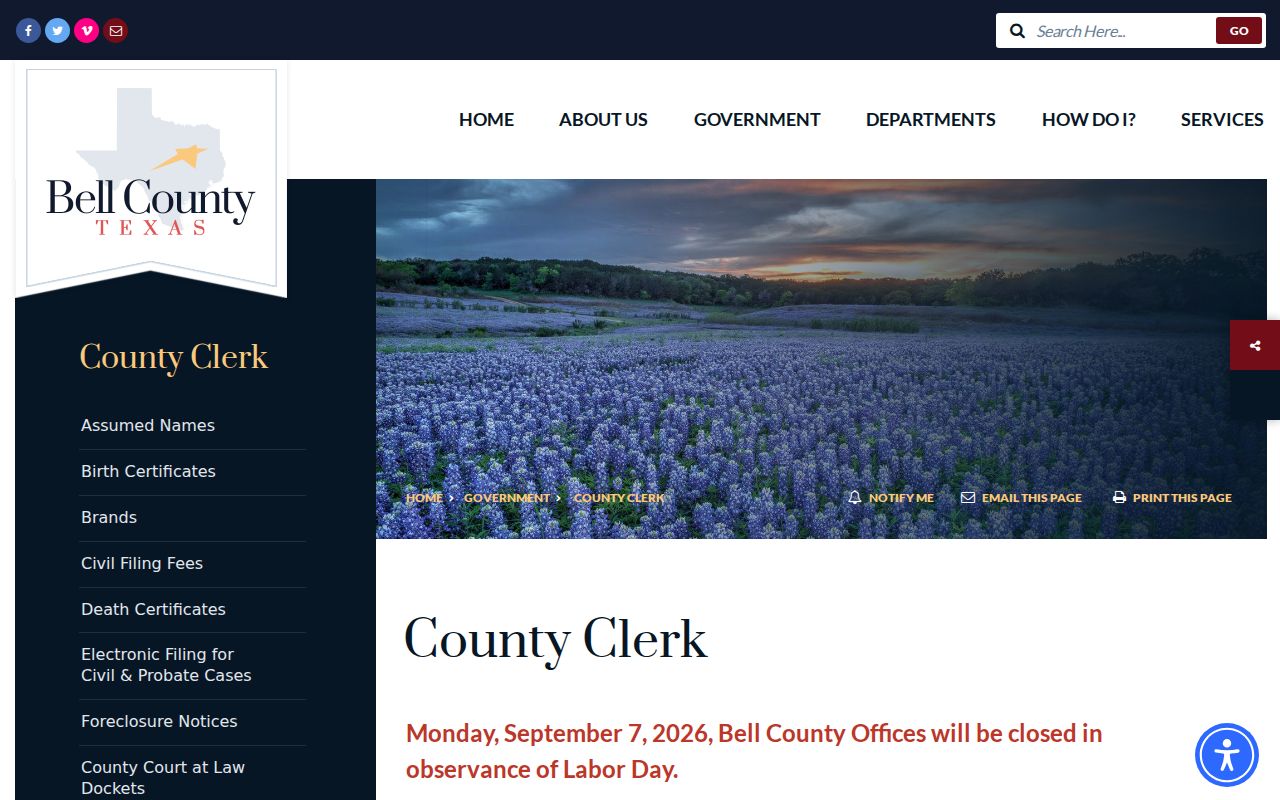
The page is an office map, not a result list. It helps separate a property-recording request from a civil, probate, criminal, or vital-record question.
Belton Parcel Directory Keys
Bell CAD offers By Owner, ARB Search, and Advanced modes. Its advanced fields include owner name, street number, street name, property ID, geographic ID, subdivision, neighborhood, DBA, property type, tax year, agent ID, protest status, and date-related filters. The CAD help guidance is practical: try the whole address first, then simplify it, omit the street type if necessary, and use a unique part of an owner name. A property ID is the fastest path when it is already known.
| Bell CAD field | Search use | What to preserve |
|---|---|---|
| Street number and street name | Find a parcel by its situs address | Exact search spelling and tax year |
| Owner name or owner ID | Locate appraisal ownership fields | Owner role, not an occupancy claim |
| Property and geographic IDs | Join a card to map or research notes | The full identifier exactly as displayed |
| Subdivision and neighborhood | Narrow parcel context | Whether the label comes from CAD |
| Map ID and legal description | Bridge CAD to GIS, plats, and instruments | Tax year and retrieval date |
A parcel card can show both situs and mailing fields. Situs identifies the property location. Mailing identifies where tax correspondence goes. A post office box, trust, or out-of-area mailing address is not proof of who occupies the situs. CAD also cautions that updates take time, current-year certification matters, legal descriptions need verification for legal use, and some property categories may not be mapped.
Belton Deed Directory Search
The Bell County Official Records Search is the recorder trail for an instrument, not a live occupancy report. Its landing interface has quick and advanced searching, a search term that accepts grantor, grantee, subdivision, document type, or document number, recorded-date ranges, quick date ranges, and a choice between index-only and index-plus-OCR searching. It also presents account and cart controls. Save the displayed document number, type, recording date, parties, legal-description text, and source URL when a defined search returns a result.
The official-records screen captured for the Belton residents directory shows the search controls used to begin an instrument query.
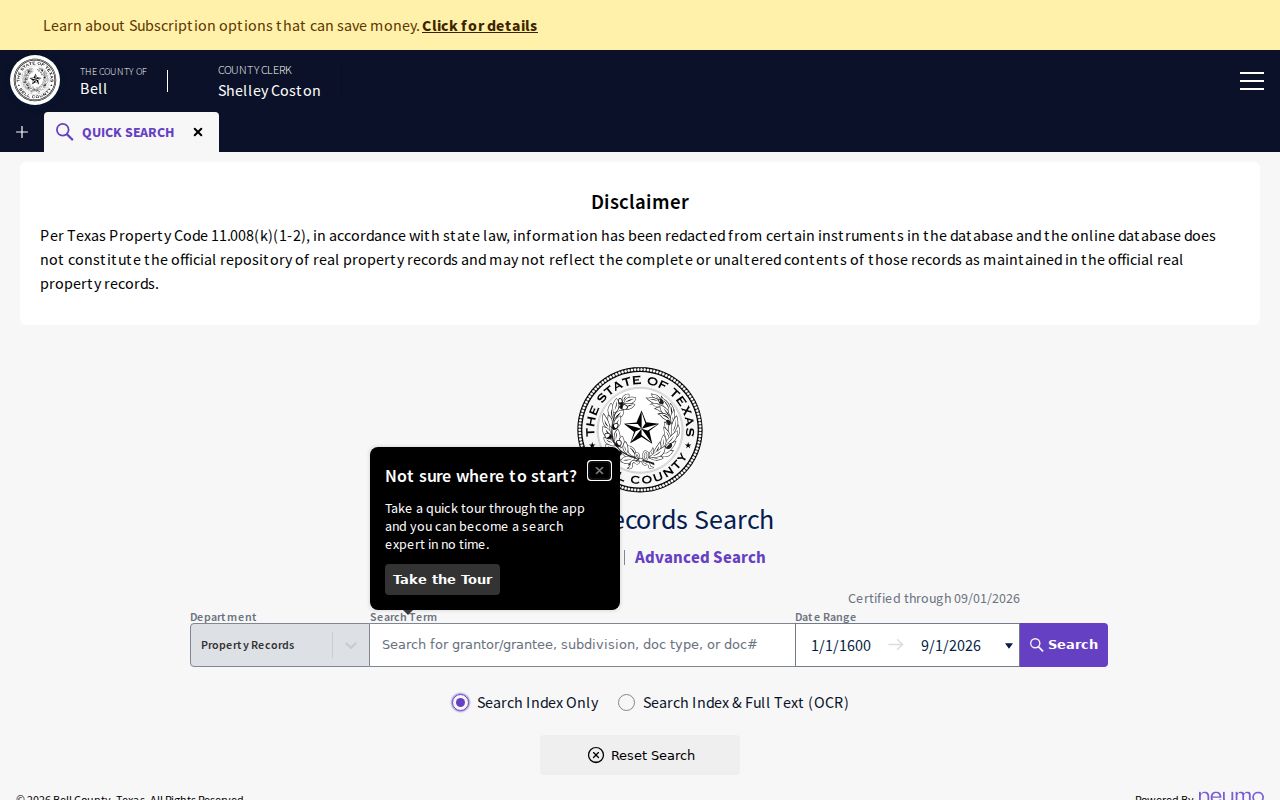
Index-only searches use indexed data, while OCR searches treat a multiword term as a phrase. That distinction can matter when initials, married names, entity names, or scan quality vary.
- Grantor
- The party transferring or releasing an interest in a recorded instrument.
- Grantee
- The party receiving an interest shown in that instrument.
- Index
- A finding aid that points to a record. It is not the same thing as the image or certified copy.
- Parcel
- A mapped piece of property connected to appraisal and legal-description identifiers.
For earlier material, the Texas State Library’s Bell County guide documents deed records from 1850 through 1902 and overlapping index reels. That microfilm route is the verified fallback because the portal does not state a first year of online coverage.
Belton Resident Rolls Today
There is no one current Belton resident roll. The usable sources are separate, and their access rules matter. Bell CAD can connect a recorded or appraisal owner to a parcel and mailing clue. VoteTexas can return registration status for a defined lookup. County court indexes identify parties and cases. The County Clerk’s index shows recorded-party roles. State license, business, and organization sources may show affiliations. None of them should be stretched into a complete household directory.
| Belton source | What it can establish | Custodian | Access route |
|---|---|---|---|
| CAD parcel card | Parcel, owner role, situs, mailing, and legal-description clues | Bell CAD | Public search, current and prior tax-year context |
| Registration lookup | Registration status for a defined person query | Texas elections system | VoteTexas route and state rules |
| Recorded instrument index | Parties, instrument type, date, and legal description | Bell County Clerk | Official Records Search, CountyFusion, or historical holdings |
| Court index | Party role, case, date, and docket context | Bell County or Texas courts | County route or re:SearchTX, subject to record rules |
| Library and civic collections | Historical names, organizations, newspapers, and local context | Library, museum, and organizations | Catalog, archive, contact, or in-person research |
A name-to-record question works best when the record type comes first. A Belton resident lookup needs the same one-person verification care, because a role in a court, business, or historical source is not automatically an address claim.
Belton Voter Lookup Limits
VoteTexas directs a voter to the state registration lookup, which uses a VUID, Texas driver-license information when supplied, or first and last name. Registration status is the relevant answer from that service. A non-match can reflect spelling, a recent move, county transfer, a missing identifier, confidentiality, cancellation, or an interface limitation. It is not a conclusion that a person has no connection to Belton.
The VoteTexas help screen below describes the state route and its registration context.
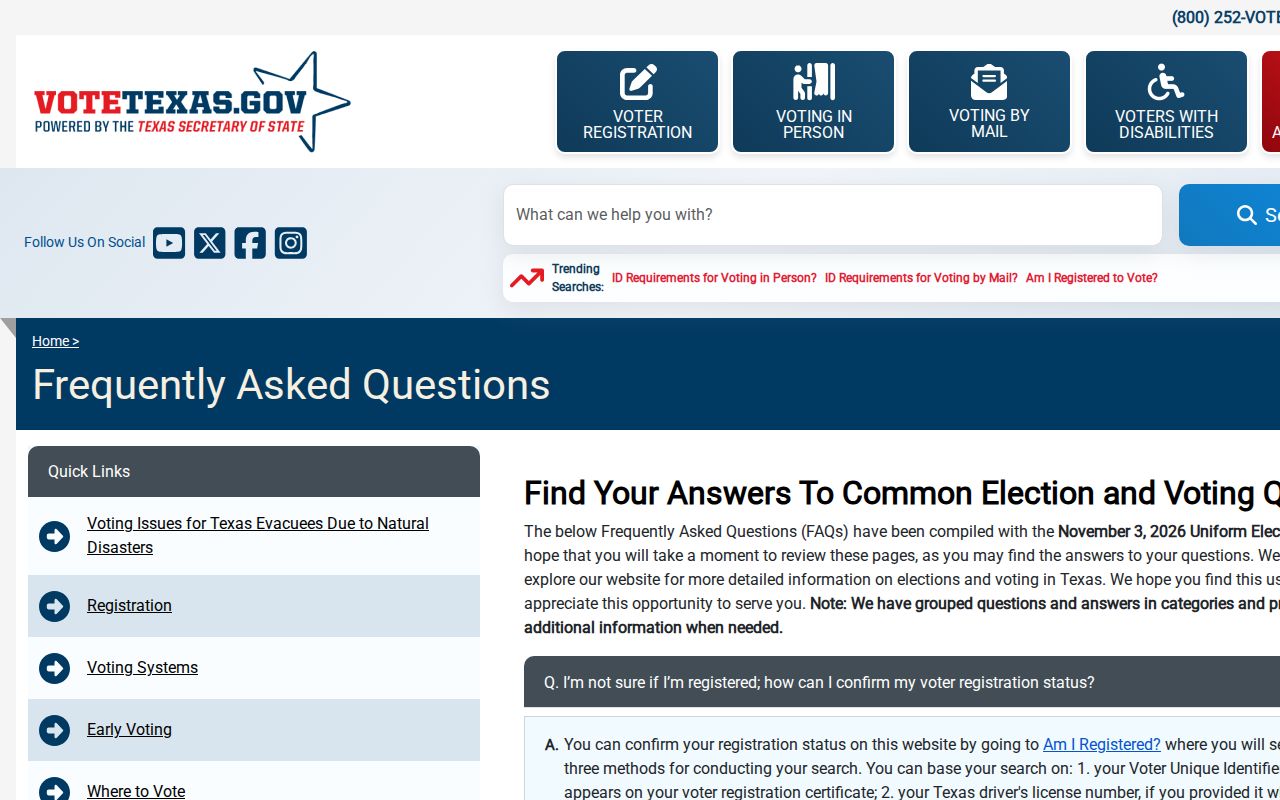
Texas voter privacy is an active access issue. The Secretary of State’s January 2026 advisory describes website suppression requests, confidential voters, protected identifiers, and Address Confidentiality Program interaction. A suppressed address or a display using asterisks is a privacy boundary, not a lead to overcome.
Note: The Secretary of State’s public-information voter-file form has an affidavit, payment or deposit, physical-address, and permitted-use requirements, so it is not a casual street roster.
Belton City Record Requests
Some city material has no confirmed anonymous search interface. Belton’s planning and building pages point to permit services, but the inspection did not locate a public permit or code-case archive with a complete field list. For a defined address, date range, or department record, use the City of Belton public-information request portal. Ask for an existing log, file, or index; name the department, date range, preferred electronic format, and the public portions sought.
The municipal request portal provides the city’s online request route for a Belton records question.
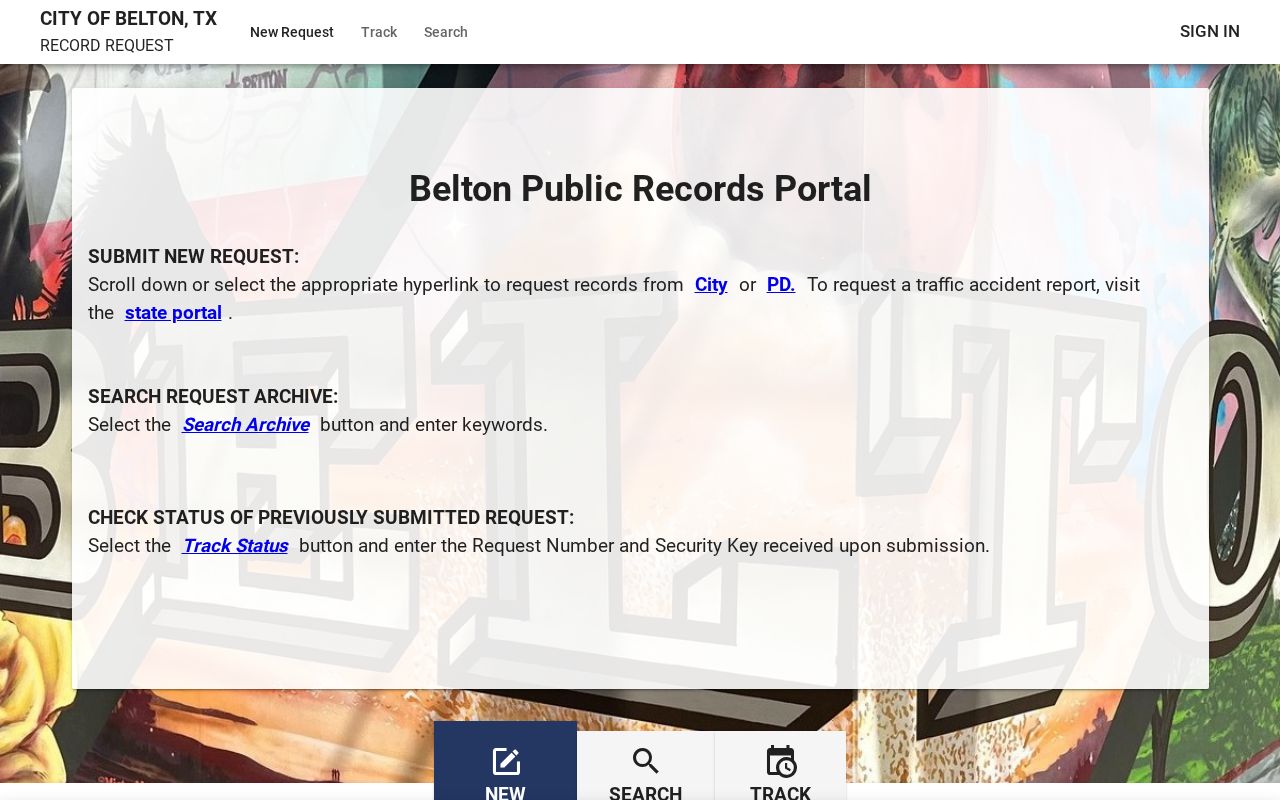
A clear request might seek a defined permit file with address, work date, and status fields if public. It should not presume that an applicant, contractor, or owner representative is the current occupant. Texas Government Code Chapter 552, the Texas Public Information Act, provides the request-and-exception framework. A custodian can redact confidential information and release a segregable public portion.
Belton Historical Resident Directories
Belton’s historical trail is broad but distributed. The Texas State Library city-directory guide identifies print and microform access in Austin, digitized directories through the UNT Portal, Texas directory holdings at the UT Briscoe Center, and library-access routes such as Ancestry Library and HeritageQuest. The inspection did not locate a complete Belton-specific city-directory run, publisher sequence, shelf mark, or digitized entry. That gap should remain visible rather than be filled with a guessed directory title.
Belton Public Library is a practical local starting point for newspaper, obituary, genealogy, catalog, and interlibrary-loan leads. The Bell County Museum Research Library has in-house Central Texas family, map, cemetery, and local-history material. The focused collection questions and access routes are detailed on the Belton city directory page.
Note: Cite a historical directory as a dated publication entry, because an address, occupation, or household notation reflects that edition’s scope and date.
Belton Microfilm Record Boundaries
The Texas State Library’s Bell County guide gives concrete historical limits where a modern portal does not. It lists deed records from 1850 to 1902 with overlapping index periods, death records from 1903 to 1937 with an index through 1989, marriage records from 1850 to 1935, delayed-birth material, and commissioners-court minutes from 1850 to 1856. These are coverage clues, not a promise that each series is fully digitized or name-searchable online.
The useful historical sequence is often address or legal description, instrument, newspaper notice, map, and repository finding aid. Sanborn coverage for Belton is listed from 1885 to 1949, with inspected 1907 and 1921 examples. The maps can place a building footprint, block, or commercial use in time. They do not identify every person in a structure. A microfilm or reading-room stop may be the appropriate next step when a web search reaches a date gap.
Belton Library Research Paths
Belton Public Library links a local newspaper archive for history, obituaries, and genealogy, while the UNT Belton Public Library partner collection reports digitized local material from the 1840s through the 1960s. Its newspaper and photograph material has uneven runs, so an absent name is weak evidence. The Belton Journal, Bell County Democrat, Temple Telegram, and other titles can supply a dated notice or business context that needs corroboration from an independent record.
Friends of the Belton Public Library describes genealogy and local-history material, Central Texas photographs, Lena Armstrong Files, and family histories. The museum’s in-house library adds family, cemetery, and historic-map research. Ask each repository for an exact title, year, call number, item URL, and copying rule. That specific inquiry is more reliable than assuming a regional or county directory contains a Belton street section.
Belton Boundary Records
Belton appears in more than one geographic form. A mailing address can say Belton while a parcel lies outside the incorporated city, within an ETJ, or in another county context. USPS validates delivery information. Bell CAD identifies a situs and mailing field. Bell County’s ArcGIS map supplies parcel and road context. The City of Belton boundary service identifies City Limits, neighboring cities, Fort Hood, Bell County ETJs, TIRZ Boundary, and Belton ETJ layers. One label cannot answer every geography question.
The Comprehensive Plan’s annexation-history map adds dated ordinance context, including a 2011 disannexation reference. Use a map or ordinance date, lot or block, subdivision, map ID, and old street spelling when an older record seems to conflict with a current address. The research did not locate a master list of historical Belton renumberings or street-name changes, so a mismatch is a lead for a plat, instrument, planning file, library source, or map rather than a conclusion.
Belton Name Match Safeguards
A public search result needs its role, date, and source preserved. “Recorded grantee,” “party to a case,” “listed in a historical directory,” “license holder,” and “organization contact” are more accurate than a general label. Bell County records include common names, initials, married names, entities, and OCR variation. CAD itself recommends simplifying a name query when appropriate. A person may be connected to a Belton parcel, court filing, or newspaper item without being the same person found in another database.
When a source has no online result, use the access chain instead of treating the absence as final: Official Records Search, CountyFusion, a clerk contact, microfilm, library, museum, state archive, or a targeted public-information request. Belton’s courthouse-centered geography makes those handoffs practical, but each custodian controls its own record and privacy rule. A careful, limited search is more useful than a larger but unsupported list.